

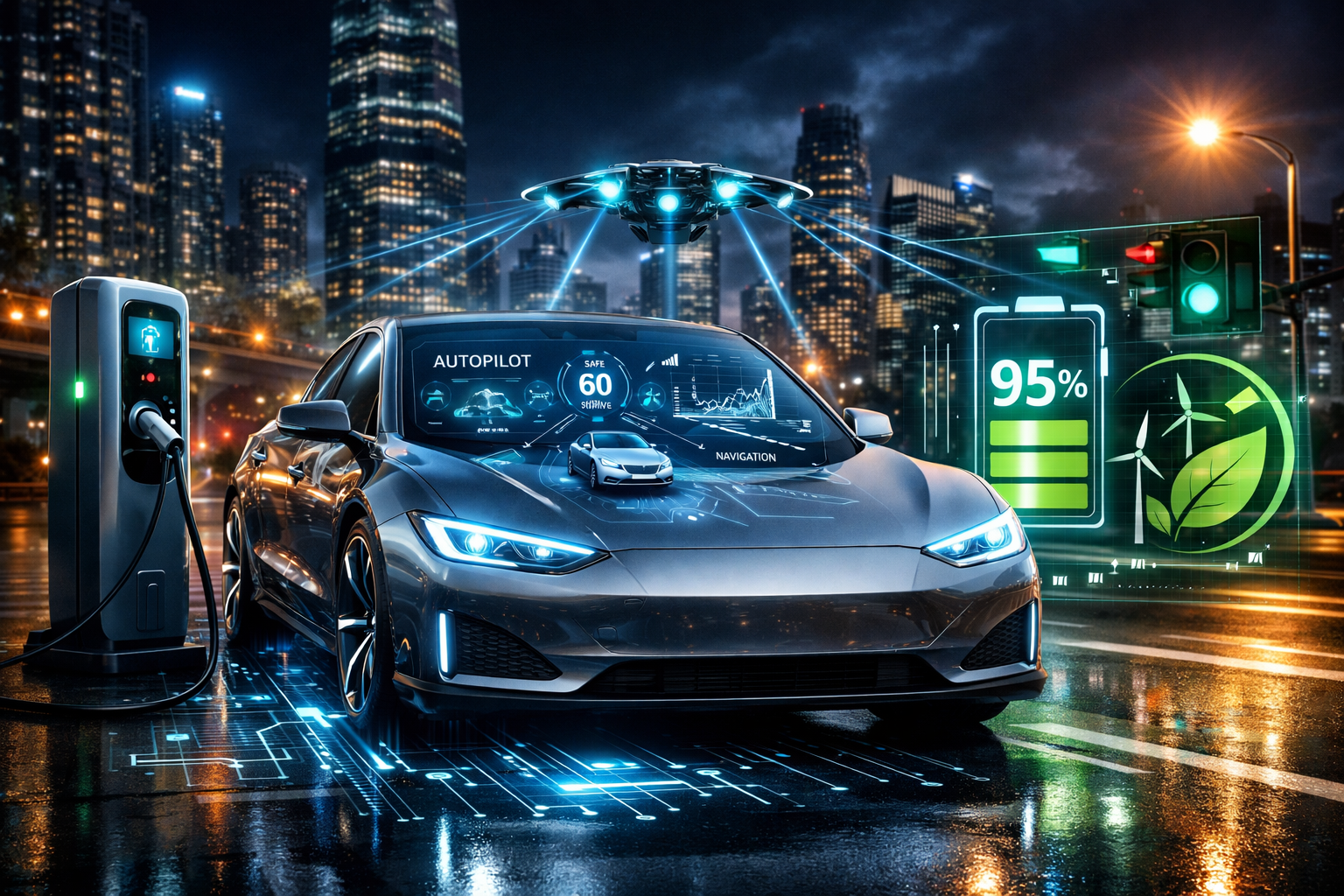
The automotive industry is going through the biggest transformation in its entire history. In 2026, cars are no longer just machines that move people from one place to another. They are intelligent, connected, software-driven devices that combine transportation with advanced technology. Electric Vehicles (EVs) and smart cars are reshaping how people travel, how cities are designed, and how energy is consumed worldwide.
With rising fuel costs, environmental concerns, government regulations, and rapid advancements in battery and software technology, electric vehicles have moved from niche products to mainstream transportation solutions. Smart features like connected dashboards, digital displays, advanced driver assistance systems, and over-the-air software updates are now becoming standard expectations for modern vehicles.
THE RISE OF ELECTRIC VEHICLES IN THE GLOBAL MARKET
Electric vehicles are no longer experimental products. In 2026, they represent one of the fastest-growing segments of the automotive industry. Major manufacturers like Tesla, BYD, Tata Motors, Hyundai, Kia, BMW, Mercedes-Benz, and Volkswagen are heavily investing in EV technology to stay competitive in a rapidly changing market.
Key factors driving EV adoption include:
- Lower running and maintenance costs
- Government incentives and tax benefits
- Rising fuel prices
- Environmental awareness
- Improved charging infrastructure
- Better battery range and reliability
Modern electric vehicles now offer ranges exceeding 400–600 kilometers on a single charge, making them practical for daily commuting as well as long-distance travel. This improvement has eliminated one of the biggest barriers to EV adoption.
BATTERY TECHNOLOGY AND CHARGING INFRASTRUCTURE
Battery technology is the heart of electric vehicles. Advances in lithium-ion batteries, energy density, and thermal management have significantly improved performance, safety, and lifespan. Manufacturers are also experimenting with solid-state batteries, which promise faster charging, higher capacity, and improved safety.
Charging infrastructure has expanded rapidly across urban and highway networks. Fast-charging stations allow EVs to charge up to 80 percent in under 30 minutes, making electric travel more convenient than ever.
Battery-related trends in 2026 include:
- Faster charging speeds
- Longer battery lifespan
- Better heat management
- Reduced charging degradation
- Increased availability of public chargers
These advancements are making electric vehicles more reliable and user-friendly for everyday use.
SMART CARS AND CONNECTED VEHICLE TECHNOLOGY
Smart cars are defined by their ability to connect, communicate, and adapt. Modern vehicles come equipped with large digital dashboards, touchscreens, voice controls, and internet connectivity. Cars can now connect to smartphones, smart homes, and cloud services, creating a fully integrated driving experience.
Connected car features include:
- Real-time navigation and traffic updates
- Voice-controlled infotainment systems
- Remote vehicle monitoring through mobile apps
- Over-the-air software updates
- Digital keys and biometric access
- Vehicle health diagnostics
These features transform vehicles into intelligent platforms that continuously improve through software updates, similar to smartphones.
ADVANCED DRIVER ASSISTANCE SYSTEMS (ADAS)
Safety technology has taken a major leap forward with Advanced Driver Assistance Systems. While fully autonomous cars are still evolving, modern vehicles already include intelligent systems that assist drivers and reduce accident risks.
Common ADAS features in 2026:
- Adaptive cruise control
- Lane-keeping assist
- Automatic emergency braking
- Blind-spot monitoring
- Parking assist and 360-degree cameras
- Driver fatigue detection
These systems enhance safety, reduce driver stress, and improve overall road safety. Smart cars are becoming co-pilots rather than just vehicles.
THE ROLE OF SOFTWARE IN MODERN VEHICLES
Software has become just as important as hardware in modern cars. Vehicle manufacturers now operate like technology companies, focusing on software platforms, user interfaces, and digital services. Over-the-air updates allow manufacturers to add new features, improve performance, and fix issues without visiting service centers.
Software-driven benefits include:
- Feature upgrades after purchase
- Improved performance and efficiency
- Bug fixes and security patches
- Personalized driving experiences
- Integration with digital ecosystems
Cars are increasingly being defined by the software they run rather than the mechanical components alone.
ELECTRIC VEHICLES AND SUSTAINABILITY
Sustainability plays a major role in the shift toward electric mobility. EVs produce zero tailpipe emissions, reducing air pollution in cities. Manufacturers are also focusing on sustainable materials, recyclable batteries, and eco-friendly production processes.
Environmental benefits include:
- Reduced carbon emissions
- Lower noise pollution
- Efficient energy usage
- Support for renewable energy integration
As renewable energy sources grow, electric vehicles will play a key role in creating a cleaner and more sustainable transportation system.
CONSUMER BUYING BEHAVIOR IN 2026
Car buyers in 2026 are more tech-aware than ever. Purchasing decisions are influenced not only by design and performance but also by technology features, software support, and long-term ownership costs.
Modern buyers consider:
- Charging availability and convenience
- Software features and updates
- Safety technology
- Total cost of ownership
- Brand reliability and service network
- Smart features and connectivity
This shift has forced traditional automakers to innovate rapidly or risk losing relevance.
THE FUTURE OF MOBILITY
The future of mobility will be electric, connected, and intelligent. As battery technology improves and smart infrastructure expands, electric and smart vehicles will become the default choice rather than the alternative.
Future developments may include:
- Fully autonomous driving
- Vehicle-to-vehicle communication
- Smart city integration
- Wireless charging roads
- Subscription-based vehicle services
Transportation is evolving from ownership-focused models to service-based mobility ecosystems.
CONCLUSION — CARS ARE BECOMING COMPUTERS ON WHEELS
In 2026, electric vehicles and smart cars represent the convergence of automotive engineering and advanced technology. Cars are no longer just mechanical machines; they are intelligent, software-powered platforms designed for efficiency, safety, and sustainability.
As technology continues to evolve, electric and smart vehicles will redefine how people move, interact, and live in an increasingly connected world.