
Introduction
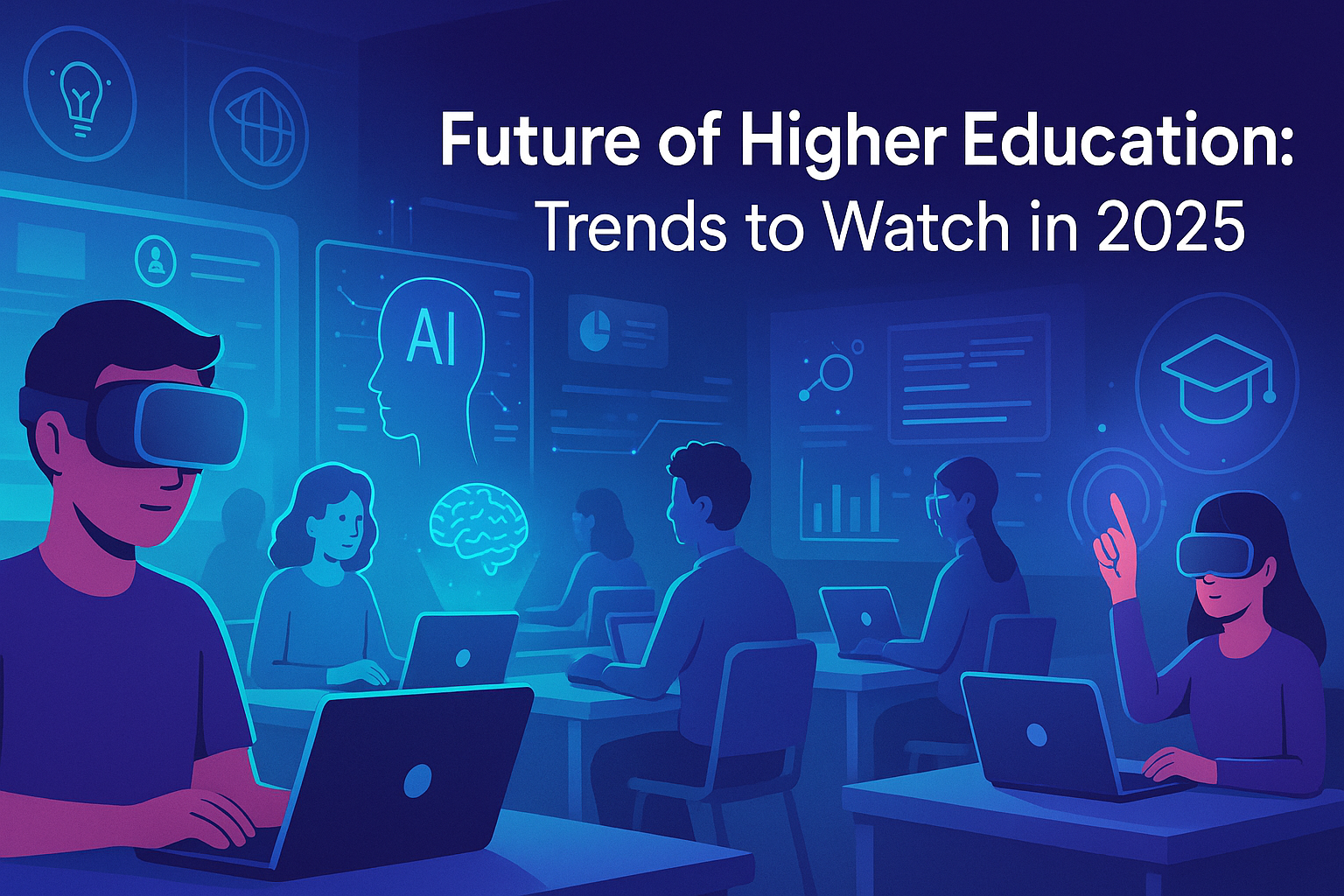
Higher education is undergoing a major transformation in 2025. Rapid technological advancements, changing student expectations, and new career demands are pushing universities and online learning platforms to innovate. Traditional classrooms are evolving into digital ecosystems, and flexible learning has become more important than ever.
This blog explores the top trends shaping the future of higher education in 2025, offering insights into how learning is becoming more accessible, interactive, and career-driven for students around the world.
1. Rise of Hybrid and Flexible Learning Models
Hybrid learning—where students combine online and offline education—has become the new norm in 2025. Instead of attending classes solely on campus, students now access recorded lectures, virtual classrooms, and self-paced learning modules.
This flexibility helps learners balance studies with work, family, or travel, making education more inclusive and adaptable to modern lifestyles.
2. AI-Powered Personalized Learning
Artificial Intelligence is reshaping higher education by offering customized learning paths based on each student’s strengths and weaknesses.
AI tools analyze learning habits and performance, recommending personalized study materials, practice exercises, or extra guidance.
This ensures that every student learns at their own pace while receiving tailored support that improves academic outcomes.
3. Skill-Based and Career-Focused Education
In 2025, employers care more about skills and practical experience than traditional degrees alone. Colleges are now integrating certification programs, hands-on projects, and industry partnerships into their curriculum.
Students can gain in-demand skills such as coding, digital marketing, AI, cybersecurity, finance, and design—directly aligned with today’s job market.
4. Microlearning and Short Certifications
Long degrees are no longer the only path to success. Microlearning offers quick, focused lessons that teach one specific skill at a time.
Short-term certification programs help students:
- Upskill quickly
- Boost employability
- Switch careers faster
- Stay updated with emerging trends
This approach has become especially popular among working professionals.
5. Growth of Virtual and Augmented Reality (VR/AR)
VR and AR are making education more immersive in 2025.
Imagine:
- Medical students practicing surgeries in virtual labs
- Engineering students exploring 3D models
- History students walking through ancient civilizations
These interactive environments help learners understand complex concepts through real-world simulations.
6. Global Classrooms and International Collaboration
Thanks to online learning platforms, students from different countries can now attend the same virtual classes, exchange cultural ideas, and work on collaborative projects.
This creates a global learning experience and prepares students to work in multicultural workplaces.
7. Data-Driven Decision Making in Universities
Universities are using advanced analytics to improve teaching methods, student performance, and administrative decisions.
Data helps educators track attendance, identify learning gaps, and create better strategies to support student success.
This leads to more efficient, responsive, and student-friendly learning environments.
8. Increased Focus on Mental Health and Student Well-Being
Higher education institutions are giving mental health the importance it deserves. In 2025, universities offer:
- Virtual therapy sessions
- Meditation and mindfulness programs
- Stress-management workshops
- Wellness-focused curriculums
This ensures students remain emotionally balanced and academically productive.
9. Blockchain for Secure Certificates and Credentials
Blockchain technology is being used to issue secure, tamper-proof digital certificates.
This prevents document fraud and allows students to share their verified credentials with employers instantly—creating a transparent and trustworthy system.
10. Expansion of Lifelong Learning Programs
Learning doesn’t stop with a degree. Universities now offer lifelong learning opportunities for adults who want to continue studying, upskill for promotions, or explore new interests.
This trend supports overall career growth and encourages continuous personal development.
Conclusion
The future of higher education in 2025 is flexible, technology-driven, and skill-focused. With hybrid learning, AI personalization, VR classrooms, and global accessibility, education is becoming more inclusive and innovative than ever before. Students are gaining not only knowledge but also practical skills that prepare them for the fast-changing job market.
As these trends continue to grow, higher education will play a crucial role in shaping capable, confident, and future-ready professionals across every field.