
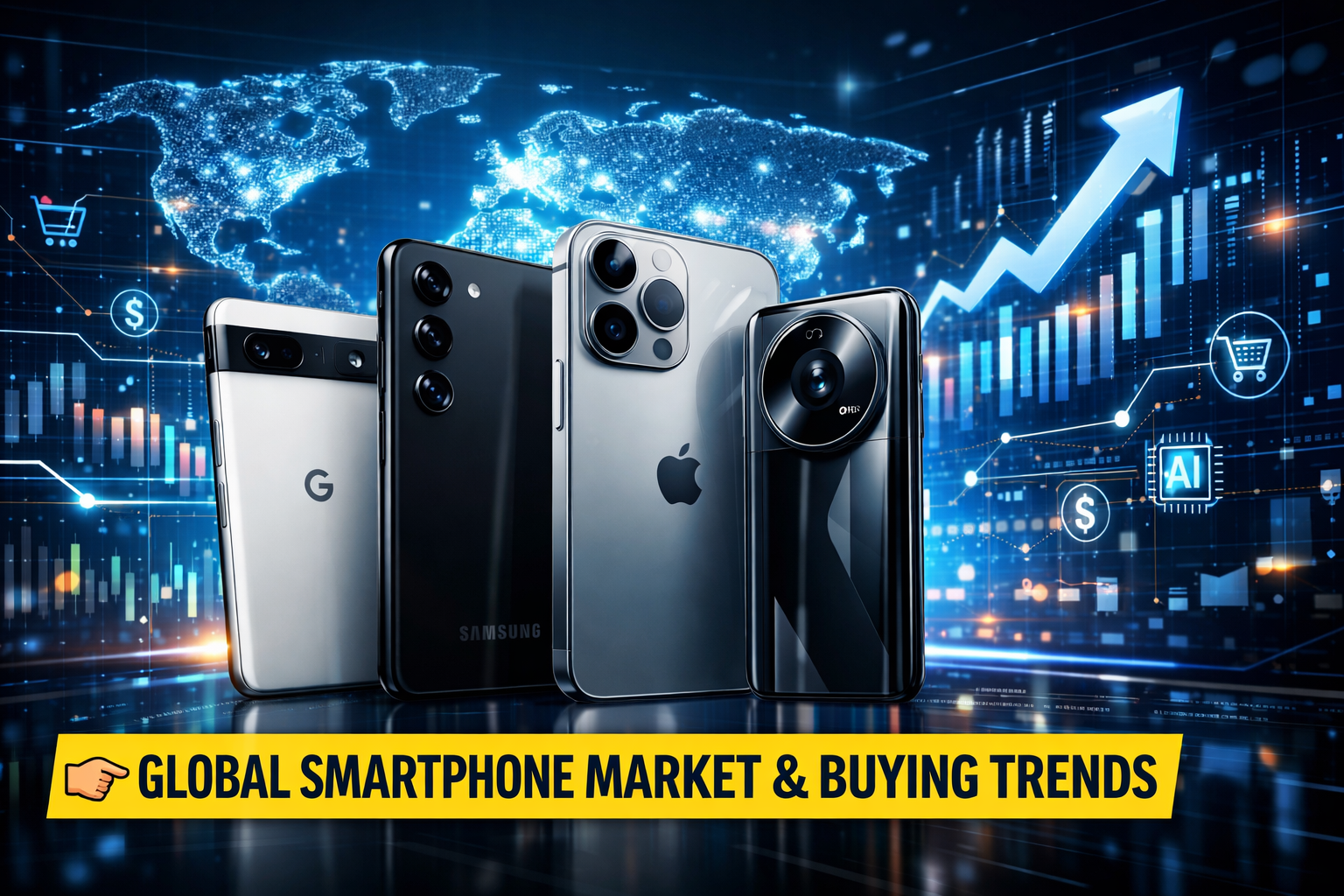
The smartphone industry in 2026 is more competitive, innovative, and consumer-driven than ever before. Smartphones are no longer just communication devices; they are essential tools for work, entertainment, content creation, gaming, photography, payments, navigation, and digital identity. With billions of active users worldwide, the global smartphone market has become one of the most influential sectors in the technology industry.
In 2026, major brands like Apple, Samsung, Xiaomi, OnePlus, Google, and emerging manufacturers are redefining what a smartphone can do. Consumers are no longer upgrading just for better cameras or faster processors. Instead, purchasing decisions are influenced by ecosystem integration, long-term software support, battery efficiency, resale value, brand trust, and overall user experience.
THE DOMINANCE OF IPHONE IN THE PREMIUM SEGMENT
Apple continues to dominate the premium smartphone segment globally. The iPhone has evolved into a status symbol, productivity tool, and ecosystem gateway. With seamless integration across MacBooks, iPads, Apple Watch, and AirPods, Apple has created a closed ecosystem that keeps users locked in for years.
Key reasons for iPhone dominance in 2026 include:
- Long-term software updates (5–7 years)
- Optimized performance and stability
- Strong privacy and security reputation
- Premium build quality and resale value
- Powerful camera and video recording capabilities
- Deep ecosystem integration
The latest iPhone models focus heavily on efficiency rather than raw specifications. Apple prioritizes real-world performance, battery optimization, and smooth user experience over hardware competition. This approach continues to attract professionals, creators, and business users worldwide.
SAMSUNG GALAXY AND THE ANDROID FLAGSHIP POWER
Samsung remains the strongest Android competitor globally, especially in flagship and foldable categories. The Galaxy S and Galaxy Z series represent Samsung’s vision for the future of smartphones, blending innovation with reliability.
Samsung’s strengths in 2026 include:
- Industry-leading AMOLED displays
- Advanced camera hardware and zoom technology
- Foldable phones with improved durability
- Broad product range from budget to ultra-premium
- Strong presence in both developed and emerging markets
Samsung has also positioned itself as a leader in foldable technology. Galaxy Z Fold and Z Flip devices are slowly moving from experimental products to mainstream adoption, especially among productivity-focused users and early adopters.
THE RISE OF ANDROID BRANDS AND VALUE-FOCUSED DEVICES
The Android ecosystem in 2026 is more diverse than ever. Brands like Xiaomi, OnePlus, Realme, Vivo, Oppo, and Google Pixel are offering powerful smartphones at competitive prices. These brands focus on delivering high performance, fast charging, advanced cameras, and premium designs at lower costs compared to traditional flagships.
Major trends among Android brands include:
- High refresh rate displays as standard
- Fast charging technology (80W–150W)
- Large batteries with better efficiency
- Flagship-level cameras in mid-range devices
- Clean software experiences and faster updates
Google Pixel phones, in particular, have carved a niche among photography enthusiasts and users who prefer clean Android software. Pixel devices emphasize camera quality, smart features, and long-term software reliability.
SMARTPHONE BUYING BEHAVIOR HAS CHANGED COMPLETELY
In 2026, consumers are smarter and more informed than ever. Smartphone buyers research extensively before making a purchase. Reviews, comparison videos, performance tests, and long-term usage reports play a major role in decision-making.
Modern buyers consider:
- Software update lifespan
- Battery health and charging speed
- Camera performance in real-life conditions
- Gaming and multitasking capability
- Brand service and repair support
- Exchange value and resale price
Sales events, festive discounts, and online-exclusive deals have become major drivers of smartphone purchases. Many users now wait for big sale seasons to upgrade their devices instead of buying at launch prices.
SMARTPHONES AS GAMING AND CONTENT CREATION MACHINES
Mobile gaming and content creation have transformed smartphones into performance-driven machines. High-end processors, advanced cooling systems, and GPU optimization have made smartphones capable of running console-level games.
Smartphone use cases in 2026 include:
- Mobile esports and competitive gaming
- 4K and 8K video recording
- Professional photography and vlogging
- Social media content creation
- Livestreaming and real-time editing
Gaming-focused smartphones and creator-centric devices are gaining popularity, especially among younger users and digital professionals.
BATTERY LIFE, CHARGING, AND LONGEVITY MATTER MORE THAN EVER
Battery technology has become a major differentiator in smartphones. Users demand all-day battery life with minimal charging time. Fast charging, wireless charging, and battery optimization are now expected features rather than luxuries.
Key battery trends in 2026:
- Larger batteries with better efficiency
- Fast wired and wireless charging
- Smarter battery health management
- Reduced overheating during charging
- Longer battery lifespan
Consumers are also becoming more conscious of sustainability, repairability, and long-term device usage.
SMARTPHONES AND THE CONNECTED ECOSYSTEM
Modern smartphones are central hubs connecting multiple devices and services. From smartwatches and earbuds to smart TVs, cars, and home automation systems, smartphones control entire digital ecosystems.
Integration areas include:
- Smart home management
- Contactless payments and digital wallets
- Vehicle connectivity and navigation
- Health tracking and fitness monitoring
- Work-from-anywhere productivity tools
This ecosystem-based approach is shaping brand loyalty and long-term customer retention.
THE FUTURE DIRECTION OF THE SMARTPHONE INDUSTRY
The smartphone market is gradually reaching maturity, but innovation continues through design, software, and ecosystem expansion. Foldable devices, satellite connectivity, improved durability, and sustainable manufacturing will shape the next phase of growth.
Future expectations include:
- Slimmer and more durable designs
- Better repairability
- Longer software support
- More personalized user experiences
- Deeper integration with everyday life
Smartphones will remain the most important personal technology device for the foreseeable future.
CONCLUSION — SMARTPHONES ARE NO LONGER JUST PHONES
The global smartphone market in 2026 reflects how deeply technology is embedded in modern life. Smartphones are no longer simple gadgets; they are personal assistants, workstations, entertainment centers, and digital identities. As brands compete to offer better value, performance, and experiences, consumers ultimately benefit from smarter and more capable devices.
The future of smartphones is not about replacing them — it’s about making them more meaningful in everyday life.