
Introduction
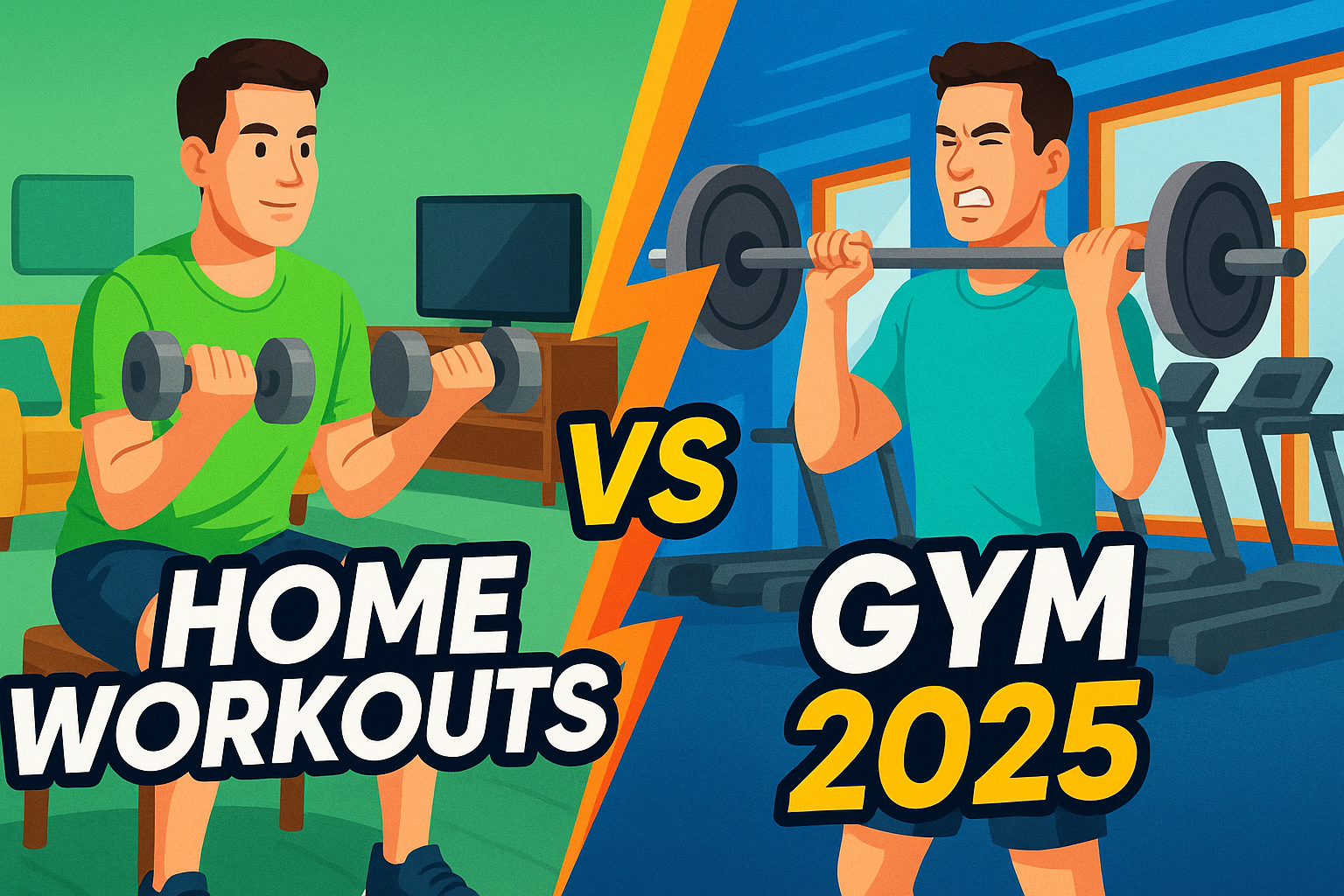
Staying fit is a top priority for many, but deciding where to work out—at home or in a gym—can be challenging. Both options offer unique advantages and challenges depending on your lifestyle, goals, and preferences. In 2025, advancements in home fitness technology and innovative gym programs have made both approaches highly effective.
In this blog, we’ll explore the pros and cons of home workouts and gym training, along with practical tips to help you choose the best approach for your fitness journey.
Home Workouts: Pros and Cons
Pros
- Convenience – No commuting or waiting for equipment, making it easier to fit exercise into a busy schedule.
- Cost-Effective – Eliminates gym memberships; basic equipment like dumbbells, resistance bands, or mats is sufficient.
- Privacy – Ideal for beginners or those who prefer exercising in a private environment.
- Flexibility – Work out anytime, adjusting the duration and intensity according to your schedule.
Cons
- Limited Equipment – Home setups may lack advanced machines and weights for certain strength training or cardio workouts.
- Distractions – Household chores, family, or work interruptions can disrupt your routine.
- Motivation Challenges – Without a social environment or instructor, staying consistent may be harder.
Gym Workouts: Pros and Cons
Pros
- Access to Equipment – Gyms offer a wide range of machines, weights, and cardio equipment for diverse workouts.
- Professional Guidance – Trainers and fitness classes provide expert instruction and motivation.
- Social Interaction – Working out with others can increase accountability and motivation.
- Variety of Programs – From group classes to high-intensity interval training (HIIT), gyms provide structured options to keep workouts exciting.
Cons
- Cost – Gym memberships and personal training sessions can be expensive.
- Time Commitment – Commuting to the gym can be time-consuming.
- Crowds – Waiting for machines or classes can disrupt your routine.
- Intimidation Factor – Beginners may feel self-conscious or overwhelmed in a gym setting.
Tips for Maximizing Home Workouts
- Create a Dedicated Space – Set up a small area with mats, weights, or resistance bands.
- Use Fitness Apps and Online Classes – Apps provide guidance, routines, and progress tracking.
- Set a Schedule – Treat home workouts like appointments to maintain consistency.
- Incorporate Variety – Mix cardio, strength, flexibility, and HIIT workouts to prevent boredom.
- Invest in Key Equipment – Dumbbells, resistance bands, stability balls, or a jump rope can cover most fitness needs.
Tips for Maximizing Gym Workouts
- Plan Your Sessions – Know which exercises or machines you’ll use to avoid wasted time.
- Try Group Classes – Classes can boost motivation and introduce you to new workout styles.
- Seek Trainer Guidance – A trainer can create personalized plans to achieve goals faster.
- Track Progress – Use apps or journals to monitor improvements in strength, endurance, and flexibility.
- Maintain Hygiene – Clean equipment before and after use to stay safe and healthy.
Hybrid Approach: The Best of Both Worlds
Many people in 2025 are adopting a hybrid approach: home workouts for convenience and flexibility, complemented by gym sessions for equipment access and professional guidance. This combination allows you to stay consistent, motivated, and adaptable regardless of schedule or location.
Conclusion
Both home workouts and gym sessions have unique advantages and challenges. Home workouts offer convenience, cost savings, and privacy, while gyms provide access to equipment, professional guidance, and social motivation. The best choice depends on your fitness goals, lifestyle, and personal preferences.
In 2025, a hybrid approach combining home and gym workouts is increasingly popular, providing flexibility, variety, and maximum results. By understanding the pros, cons, and practical tips for each, you can design a fitness routine that keeps you motivated, consistent, and on track for long-term health and wellness.
