

Introduction
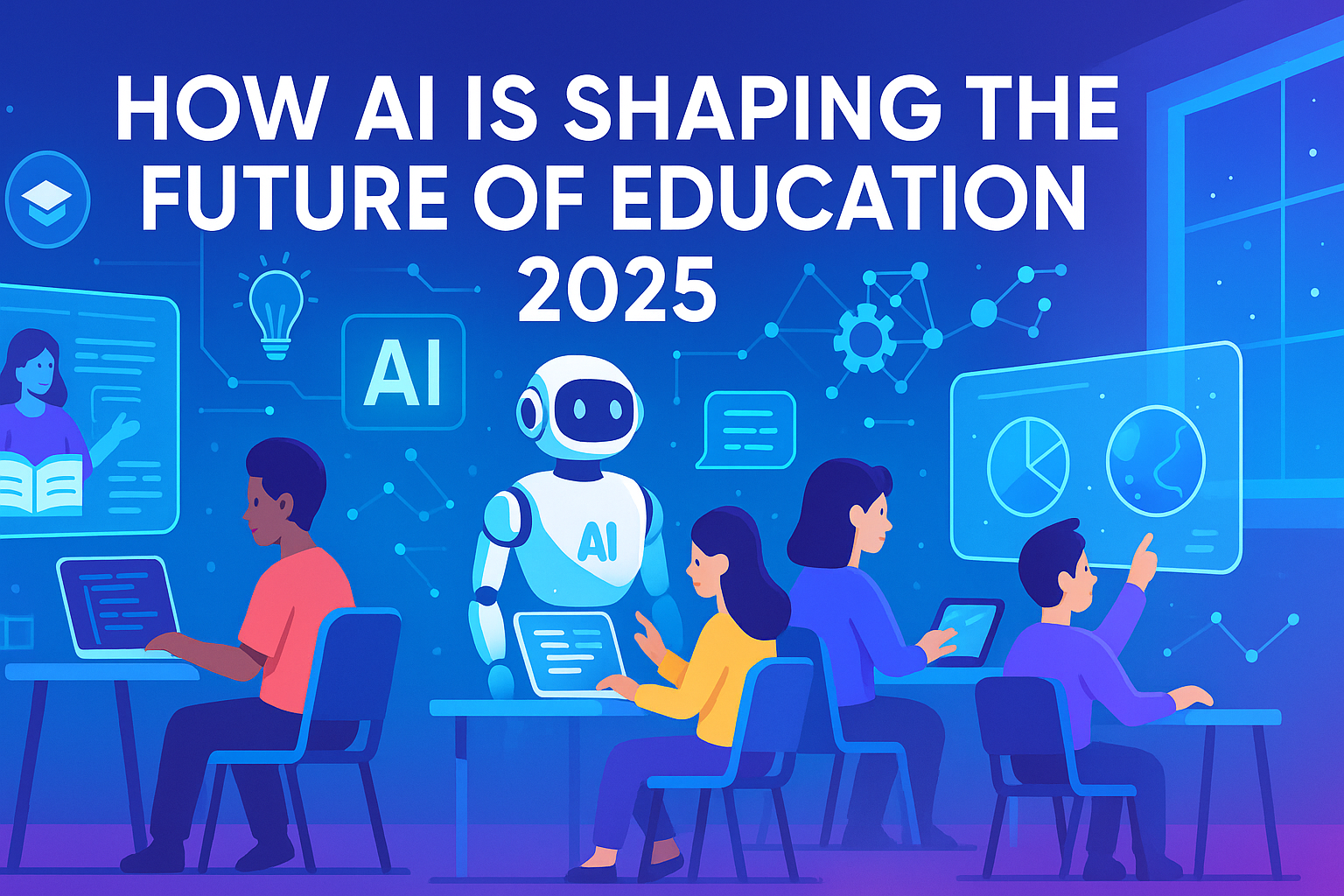
Artificial Intelligence (AI) is revolutionizing every industry, and education is no exception. In 2025, AI is transforming how students learn, teachers instruct, and institutions manage educational processes. From personalized learning experiences to administrative automation, AI is creating smarter, more efficient, and inclusive educational environments.
This blog explores the ways AI is shaping the future of education, the benefits it brings, and the trends that will define learning in the coming years.
1. Personalized Learning
AI enables tailored learning experiences for students by analyzing individual strengths, weaknesses, and learning styles. Adaptive learning platforms adjust content and pacing according to each student’s needs.
- Students struggling with a concept receive additional resources and exercises.
- Advanced learners are challenged with more complex materials.
- Real-time feedback helps students understand mistakes and improve faster.
Personalized learning ensures no student is left behind while maximizing engagement and efficiency.
2. Intelligent Tutoring Systems
AI-powered tutoring systems provide one-on-one support for learners outside the classroom. These virtual tutors can:
- Answer questions instantly
- Provide step-by-step explanations
- Track progress over time
- Offer targeted practice exercises
Such systems enhance learning outcomes, particularly in large classrooms where individual attention is limited.
3. Automation of Administrative Tasks
Educators spend a significant portion of their time on administrative tasks such as grading, attendance tracking, and report generation. AI automates these processes, allowing teachers to focus on teaching and student interaction.
- Automated grading for multiple-choice and even essay questions
- Smart scheduling and resource allocation
- Predictive analytics for student performance and dropout prevention
This leads to more efficient and productive educational institutions.
4. Enhanced Learning Materials
AI is helping create interactive and immersive learning materials. Examples include:
- AI-generated quizzes and practice exercises
- Simulations and virtual labs for science or engineering students
- AI-curated multimedia content for history, literature, or language learning
These dynamic resources make learning more engaging and effective.
5. Accessibility and Inclusion
AI-driven tools are improving accessibility for students with disabilities. Features include:
- Speech-to-text and text-to-speech technology
- Real-time language translation
- Adaptive interfaces for visual or hearing impairments
AI ensures that learning is more inclusive and reaches a broader audience worldwide.
6. Predictive Analytics for Better Outcomes
AI systems can analyze historical and real-time data to predict student performance and identify areas of improvement.
- Early warning systems flag students at risk of falling behind
- Personalized interventions are suggested to teachers or students
- Data-driven decisions improve curriculum design and teaching strategies
This predictive approach helps educators take proactive steps rather than reactive ones.
7. Virtual Classrooms and AI Collaboration
AI is enhancing remote and hybrid learning environments. AI-powered tools facilitate:
- Smart scheduling and class recommendations
- Virtual assistants that answer students’ questions during online lectures
- Intelligent discussion forums moderated by AI for smoother communication
These technologies make online learning more interactive, personalized, and efficient.
8. Continuous Professional Development for Educators
AI also supports teachers’ growth by analyzing classroom performance, suggesting teaching strategies, and providing training recommendations. Educators can use AI insights to improve lesson plans, classroom engagement, and overall teaching effectiveness.
Benefits of AI in Education
- Personalized learning tailored to each student
- Time-saving for teachers through automated tasks
- Data-driven decisions improving student outcomes
- Increased accessibility for students with disabilities
- Engaging and interactive content for better learning experiences
AI not only enhances efficiency but also fosters a more student-centered and inclusive learning environment.
Conclusion
Artificial Intelligence is reshaping the educational landscape in 2025, making learning more personalized, engaging, and efficient. From intelligent tutoring systems and predictive analytics to immersive learning materials and accessibility tools, AI empowers both students and educators.
As AI continues to evolve, the future of education will be more adaptive, inclusive, and data-driven, preparing learners for the rapidly changing demands of the modern world