
Technology is changing faster than ever, and smartphones are becoming more futuristic with every passing year. We’re entering a new era where devices will not only make calls or take pictures but will think, respond, predict, and perform like intelligent companions. The future of smartphones is not about bigger screens and faster processors anymore. It’s about Artificial Intelligence, foldable and rollable displays, satellite communication, spatial computing, on-device machine learning, and hardware built to replace laptops, tablets, and even basic desktops.
This article breaks down the major changes future smartphones will bring and how the next generation of users will experience technology differently. Welcome to the smartphone revolution of 2025 and beyond.
AI will become the heart of smartphones
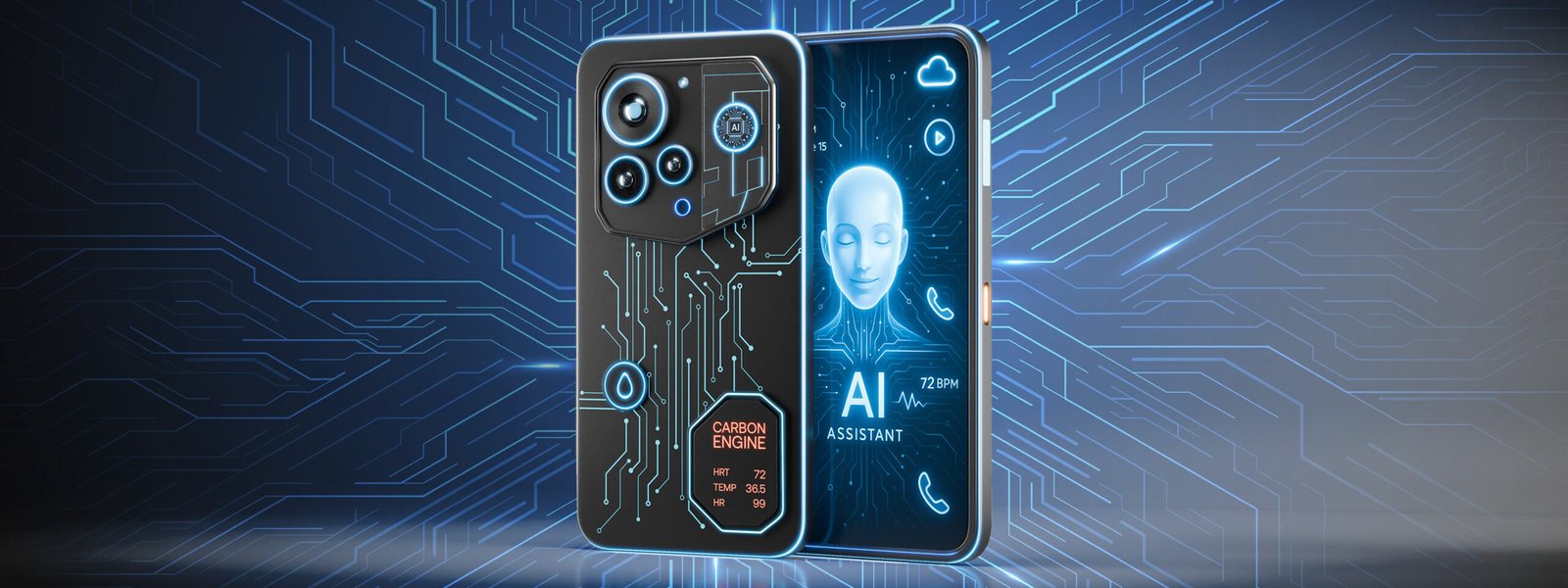
AI is no longer a feature; it is becoming the foundation of modern devices. The latest chips from Qualcomm, Apple, MediaTek, and Samsung are designed with dedicated NPUs (Neural Processing Units) to handle AI-focused tasks directly on the phone rather than cloud servers. This means faster processing, better privacy, and real-time responses.
WHAT AI WILL CHANGE IN SMARTPHONES:
- AI-generated wallpapers, videos, and content
- Personalized interfaces that adapt to user behavior
- Predictive battery management and app usage
- Real-time voice commands without internet
- Instant photo editing, background removal, and enhancement
- Smart translation during calls in real time
- AI camera sensors that understand lighting and subject
Phones like the iPhone 16 Pro, Samsung Galaxy S25 Ultra, and Pixel 10 Ultra are expected to lead the AI-driven market. Soon, smartphones will become digital assistants that learn you — not just follow instructions.
Foldable and Rollables Smartphones are the next big shift
The foldable smartphone market is evolving rapidly. Samsung, OnePlus, Oppo, Honor, Xiaomi, and Motorola have already entered the game. 2025 and 2026 will introduce rollable phones — devices that expand like a scroll to form tablet-size screens from a pocket-sized body.
FUTURE DISPLAY TECHNOLOGIES:
- Foldable displays with crease-free hinge systems
- Rollable screens that extend with a swipe
- Stretchable displays that reshape when needed
- Holographic 3D projection for gaming and movies
- Eye-tracking displays for hands-free usage
In the next few years, a smartphone could serve as a pocket tablet, laptop workspace, entertainment hub, and productivity tool — all from a single device.
Satellite Connectivity Will Make Network Failures Irrelevant
The new era of smartphones will not rely only on towers and Wi-Fi; satellite communication will become mainstream. Currently, emergency SOS satellite messaging has started appearing in premium phones, but soon even budget and mid-range models will support:
- Satellite calling technology
- Emergency geolocation services
- Rural and remote network coverage
- Disaster-zone connectivity
- Navigation independent of mobile networks
Imagine trekking in a mountain, stuck with no signal, yet making a satellite call directly from your phone. This feature will redefine global communication and remove dependency on cell companies in critical scenarios.
The Future Camera System Will Outperform Dslr For Most Users
Smartphone cameras are becoming professional-grade. The future belongs to computational photography — not just a bigger lens. AI will analyze every frame, correct lighting, enhance contrast, stabilize motion, and process depth like a studio camera.
UPCOMING CAMERA ADVANCEMENTS:
- Variable aperture like professional lenses
- 1-inch+ sensors in mainstream phones
- AI cinematic mode for automatic filmmaking
- 8K video recording with real-time stabilization
- Super-zoom telephoto lenses up to 200x (optical fusion)
- Lens coatings to reduce reflection and night glare
Within 2–3 years, most content creators, vloggers, and filmmakers will shoot complete projects using only smartphones.
On-Device Computing: Smartphones Replacing Laptops
With faster chipsets and desktop-grade power efficiency, smartphones are becoming capable of professional work. USB-C powered display modes (like Samsung DeX, Motorola Ready For, and Apple Sidecar features) will turn phones into computers.
WORKSCAPE CHANGES:
- Plug phone → open desktop UI on monitor
- Full productivity tools like Excel, Photoshop, Figma & coding
- Cloud machines for AAA gaming & workstation tasks
- Biometrics for secure enterprise work
Smartphones will not just be mobile devices; they will be the central hub controlling user ecosystems — smart homes, smart vehicles, wearables, AR glasses, banking, and personal identity.
Spatial Computing And Ar Integration Will Be Game-Changers
With Vision Pro, Meta Glasses, and Samsung XR, spatial technology is becoming mainstream. Smartphones will become the controlling device for extended reality environments.
UPCOMING AR FEATURES:
- 3D interface projection over real world
- AR navigation replacing Google Maps displays
- Interactive product trial in real-time space
- AR social apps to meet friends in holographic environments
- XR gaming combining real and virtual universes
Soon, a phone screen will not be the limit — the world will become the screen.
Battery, Fast Charging & Port-Less Future
One of the biggest obstacles in smartphones is battery life. The next generation introduces major improvements:
- Graphene batteries
- 120W–240W charging standards
- Full charge in under 10 minutes
- Smart heat management systems
- Wireless-only charging (no ports)
- Full waterproof and dust-sealed design
Future devices may eliminate ports completely — only wireless chargers, eSIM, and Bluetooth accessories will remain.
The Future Is A Smartphone That Thinks Like A Companion
The smartphone of tomorrow will:
- Think like an assistant
- Work like a workstation
- Capture like a professional camera
- Connect like a satellite device
- Display like a tablet
- Compute like a desktop
- Protect privacy like a security vault
This is not evolution. It is transformation.
Conclusion – A Future Designed Around The User
Smartphones are no longer just gadgets. They are entering a phase where innovation focuses on intelligence, flexibility, global communication, and replacing multiple traditional devices. The next major shift will not only be about what a smartphone does, but what it replaces in daily life.